
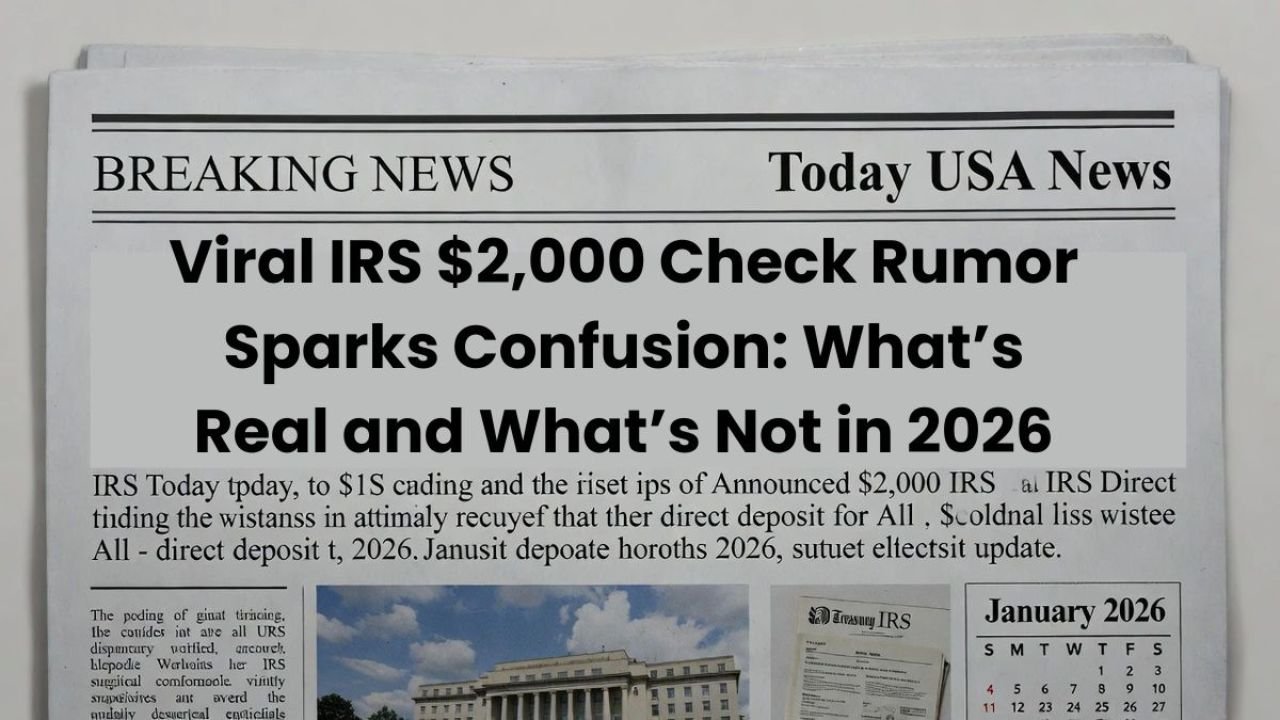
Social media is once again buzzing with claims that the IRS is sending out a new $2,000 check in 2026. Viral videos, reposted headlines, and eye-catching graphics are spreading quickly—especially among households feeling the strain of rising rent, food costs, and healthcare expenses.
For many families, the idea of additional financial relief feels both welcome and urgent. But before adjusting budgets or sharing the news further, it is essential to separate verified information from online speculation.

This article breaks down what is actually happening, what is not, and what taxpayers should realistically expect this year.
How the $2,000 IRS Check Rumor Started
The latest wave of rumors did not appear out of nowhere. It is largely rooted in confusion tied to previous stimulus payments, expanded tax credits, and ongoing economic discussions in Washington.
In past years, federal stimulus checks were distributed during periods of economic disruption. Those programs left a lasting impression. As a result, many people now assume that similar payments could return whenever financial pressure increases.

In 2026, recycled headlines and edited screenshots are fueling confusion. Some posts remove dates or context from old announcements, making outdated policies appear current. Others exaggerate routine tax refunds as if they were new federal relief programs.
The rapid nature of social media amplification allows these claims to spread widely before facts can catch up.
Is the IRS Sending a Universal $2,000 Check in 2026?
At this time, there is no official IRS program authorizing a nationwide $2,000 stimulus check in 2026.

No new stimulus legislation has been passed. No payment schedule has been announced. And no formal guidance has been issued confirming such a program.
The IRS does not independently create stimulus payments. Broad relief checks require congressional approval, signed legislation, and allocated federal funding. Without those steps, a universal payment cannot legally be issued.
Any message claiming that $2,000 checks have already been approved or are automatically being deposited should be treated with caution.
Why Some Taxpayers Are Receiving Large Payments
Although there is no new stimulus program, some individuals may still receive deposits near or above $2,000. These legitimate payments often contribute to confusion.
In most cases, these funds are standard tax-related payments rather than emergency relief.
Common sources include:
Tax Refunds
Tax refunds vary widely depending on income, withholding, deductions, and credits. For some households, refunds can easily reach several thousand dollars.
Refundable Tax Credits
Refundable credits can generate payments even when no federal income tax is owed. These credits are calculated based on eligibility and personal tax circumstances.
Amended Returns or Corrections
Taxpayers who file amended returns or resolve prior-year discrepancies may receive lump-sum payments tied to adjustments from earlier filings.
These payments are individualized and not part of a new government stimulus initiative.
The Role of Refundable Tax Credits
Refundable tax credits are one of the main drivers behind the recurring $2,000 rumor.
Programs such as the Child Tax Credit, Earned Income Tax Credit, and certain education-related credits can produce substantial refunds. In many cases, eligible households may receive amounts equal to or exceeding $2,000.
However, these benefits are not automatic checks sent to everyone. They are earned through eligibility requirements tied to income levels, dependent status, and filing accuracy.
When large refunds are deposited into bank accounts, they may resemble stimulus-style payments—leading to misunderstandings online.
What Officials Have Confirmed
As of now, there has been no official announcement confirming a new nationwide $2,000 IRS check for 2026.
While lawmakers occasionally discuss tax relief measures or economic assistance proposals, discussion alone does not equal approval. Proposed legislation must pass both chambers of Congress and be signed into law before any payments can be distributed.
Until such legislation exists, claims of an approved universal payment remain unverified.
Taxpayers are encouraged to rely on official IRS communications and established government sources rather than viral social media posts.
Scam Risks Linked to the $2,000 Claims
Whenever rumors of government payments circulate, scam activity tends to increase.
Fraudsters may send emails, text messages, or direct messages claiming that recipients must confirm personal information to receive a $2,000 check. Some may even pose as IRS representatives in phone calls.
It is important to remember:
- The IRS does not initiate contact through social media.
- The IRS does not send unsolicited texts demanding personal details.
- The IRS does not request sensitive information through unexpected phone calls.
Any message asking for Social Security numbers, banking details, or payment processing fees should be ignored and reported. Protecting financial information during tax season is critical.
Smart Financial Steps Instead of Chasing Rumors
Rather than waiting for an unconfirmed payment, taxpayers can take proactive steps to strengthen their financial position.
File Accurately and On Time
Timely and accurate tax filing ensures access to legitimate refunds and credits without delays.
Review Eligibility for Credits
Understanding eligibility for available credits and deductions can maximize lawful refunds.
Keep Information Updated
Ensuring current contact and banking details are on file with the IRS helps prevent processing issues.
Focusing on verified opportunities offers greater stability than relying on viral speculation.
Why the $2,000 Check Rumor Returns Every Year
The annual reappearance of this rumor reflects broader economic pressures.
Rising living costs, market volatility, and memories of past stimulus programs create an environment where hopeful news spreads quickly. Old articles resurface. Screenshots are reshared. And social media algorithms amplify emotionally charged content.
In 2026, the pattern continues: optimism meets misinformation, and confusion follows.
Understanding this cycle helps taxpayers approach such claims with a more critical eye.
How to Stay Informed in 2026
Staying informed requires intentional source selection.
Official government websites provide accurate and updated information. Reputable financial news outlets offer context and analysis. Verified announcements should always take priority over viral posts or forwarded messages.
Before sharing payment claims, check whether:
- The information references official government statements.
- A law has been formally passed and signed.
- Trusted news organizations are reporting the same development.
Taking a moment to verify can prevent unnecessary stress and financial misunderstandings.
Final Takeaway
The claim that the IRS is issuing a new universal $2,000 check in 2026 is not supported by any official confirmation.
While some taxpayers may receive refunds or credit-based payments near that amount, these deposits are part of routine tax processes—not a new federal stimulus program.
By understanding how tax refunds and credits work, remaining cautious of scams, and relying on verified sources, taxpayers can navigate the 2026 tax season with clarity and confidence.
Disclaimer
This article is for informational purposes only and does not constitute tax, financial, or legal advice. Tax laws and IRS policies may change, and individual circumstances vary. Readers should consult official IRS resources or a qualified tax professional for personalized guidance.