
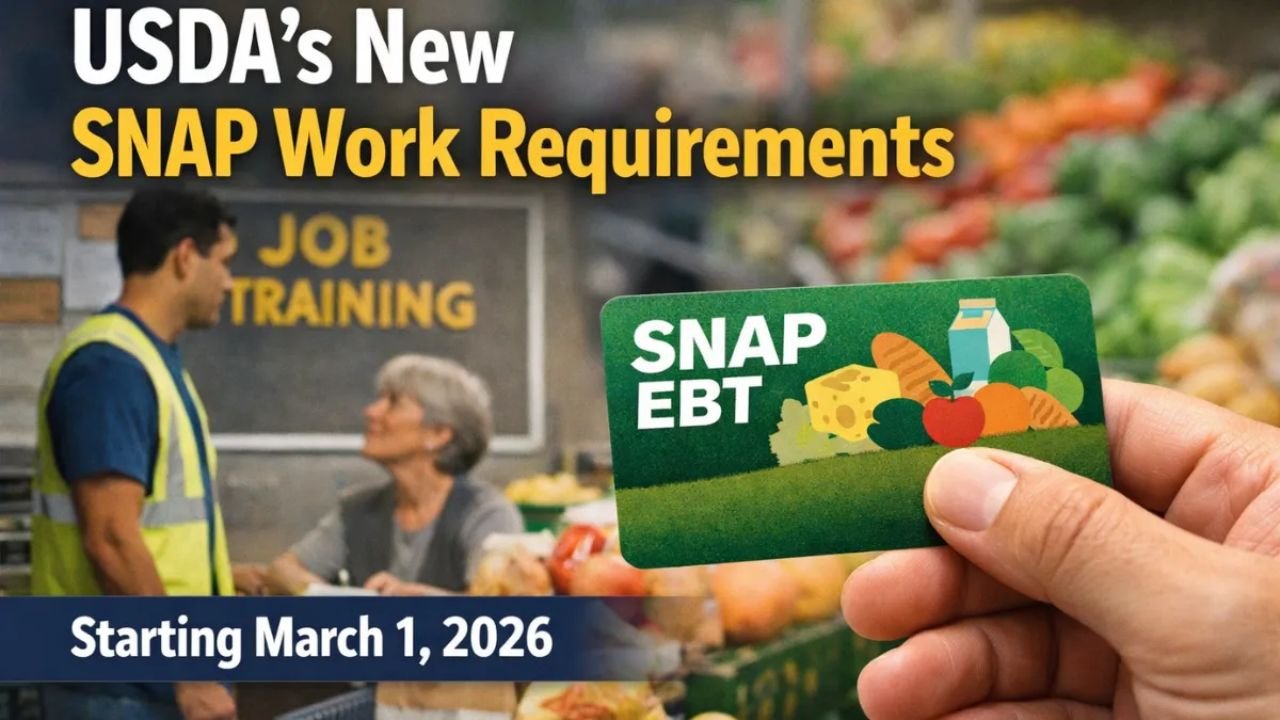
Beginning March 1, 2026, the U.S. Department of Agriculture (USDA) will roll out updated work requirements for the Supplemental Nutrition Assistance Program (SNAP). This nationwide change represents one of the most significant adjustments to the program in recent years and reflects a broader shift in how federal assistance programs are structured in the United States.
According to the USDA, the new policy is designed to encourage workforce participation while preserving SNAP’s core mission of reducing hunger. The announcement has drawn widespread attention, as millions of Americans rely on SNAP benefits to manage rising food costs amid an evolving economic landscape.
Understanding the New SNAP Work Requirements

The updated rules primarily apply to Able-Bodied Adults Without Dependents, often referred to as ABAWDs. This group includes individuals between the ages of 18 and 52 who are not pregnant and do not have dependents in their household.
Under the new policy, affected recipients must meet specific participation standards to continue receiving SNAP benefits beyond limited time periods.
Work and Participation Standards
Starting March 1, eligible individuals must satisfy at least one of the following requirements:
- Work a minimum of 20 hours per week in paid employment
- Participate in a qualifying job training or education program
- Complete approved community service activities for at least 20 hours per week

Failure to meet one of these conditions may result in benefits being limited to three months within a three-year period, unless the individual qualifies for an exemption.
Who Is Exempt From the New SNAP Rules
While the policy introduces stricter standards, it does not apply universally. Several categories of recipients are exempt, ensuring that vulnerable populations are not disproportionately affected.
Groups Exempt From Work Requirements
The following individuals are generally exempt from the new rules:
- Adults over the age of 52
- Individuals with documented physical or mental disabilities
- Pregnant women
- Veterans and individuals experiencing homelessness in most cases
- Caregivers responsible for dependents or incapacitated adults

In addition, states retain limited authority to request temporary waivers in regions facing high unemployment or insufficient access to jobs and training opportunities.
Why the USDA Is Making These Changes
The USDA has framed the new requirements as part of a modernization effort aimed at strengthening SNAP’s long-term effectiveness. Officials argue that the program was originally designed as temporary support during periods of financial hardship, rather than a permanent income supplement.
Aligning SNAP With the Labor Market
With national labor participation remaining relatively strong, the department believes more able-bodied adults can engage in work or skill development. The updated rules also bring SNAP closer in structure to other federal programs, such as Temporary Assistance for Needy Families, which already emphasize employment and training.
Supporters of the policy say it encourages independence and skill-building, while critics warn that it may overlook structural barriers faced by certain workers, including unstable job schedules or limited transportation.
How States Are Preparing for Implementation
State agencies play a critical role in administering SNAP, and they are now responsible for implementing the new rules and communicating them clearly to recipients. Many states are expanding partnerships with workforce development centers, community colleges, and nonprofit organizations to increase access to qualifying programs.
Steps SNAP Recipients Should Take
Individuals currently receiving SNAP benefits can take proactive steps to remain compliant:
- Confirm whether they fall under the ABAWD category
- Maintain accurate records of work, training, or volunteer hours
- Enroll early in approved education or workforce programs
- Monitor official notices from state SNAP offices for updates or exemptions
Early preparation can reduce the risk of benefit disruptions due to documentation errors or misunderstandings.
Potential Effects on Food Security
The USDA estimates that hundreds of thousands of adults nationwide could be affected by the revised work requirements. Some recipients are expected to transition into employment or training programs, while others may temporarily lose benefits if they are unable to meet the criteria.
Balancing Accountability and Access
Food policy experts note that communities with limited job availability may face higher risks of food insecurity. Rural regions and areas with fewer public transportation options could be particularly impacted. In response, the USDA emphasizes that exemptions and waivers are built into the policy to protect those genuinely unable to work.
The department maintains that encouraging workforce engagement ultimately strengthens household stability and reduces long-term reliance on assistance.
What This Signals for the Future of SNAP
The March 1 update is part of a broader national discussion about balancing support and accountability within public assistance programs. Policymakers continue to explore reforms that adapt SNAP to modern economic conditions while safeguarding its foundational purpose.
Data collected over the coming months will be closely analyzed to assess participation trends, employment outcomes, and changes in food access across different regions.
A Program in Transition
SNAP has long been a cornerstone of the nation’s social safety net. As economic conditions evolve, so too does the approach to administering aid. The new work requirements reflect a shift toward integrating assistance with workforce development rather than treating them as separate systems.
For recipients, staying informed and engaged will be essential. For policymakers, the challenge lies in ensuring that reform strengthens self-sufficiency without undermining food security.
Summary
Starting March 1, 2026, the USDA’s updated SNAP work requirements will require most able-bodied adults without dependents to work, train, or volunteer at least 20 hours per week to maintain eligibility beyond limited timeframes. While the policy aims to promote workforce participation and program sustainability, it also raises important questions about access, equity, and local economic conditions.
As this nationwide change takes effect, awareness, preparation, and clear communication will be key for both recipients and state agencies navigating the next chapter of SNAP in the United States.