
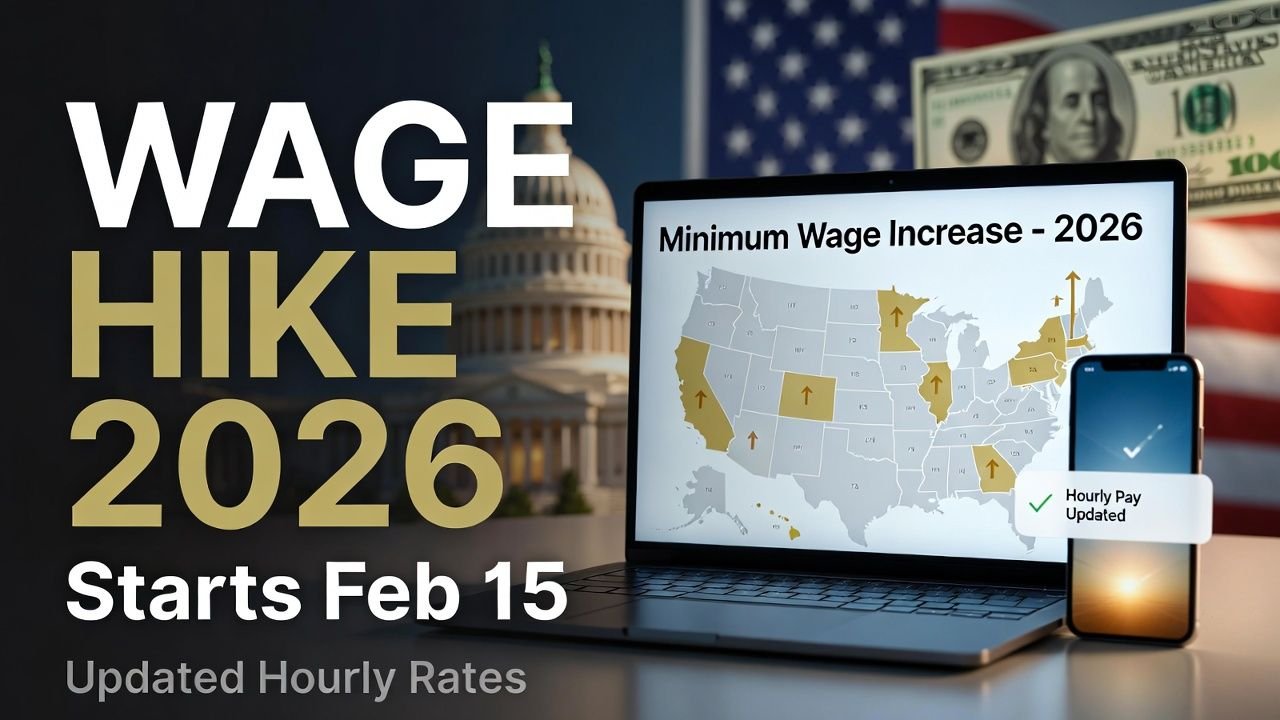
As 2026 unfolds, minimum wage increases across the United States are delivering tangible pay raises for millions of workers. While the federal minimum wage remains unchanged at $7.25 per hour, many states and local governments have implemented higher wage floors, reflecting continued efforts to address rising living costs and long-standing wage stagnation.
These changes highlight a growing divide between federal policy and state-level action. With inflation affecting housing, food, transportation, and healthcare, state governments are increasingly stepping in to ensure that workers earn wages better aligned with today’s economic realities.
Federal Minimum Wage Remains Unchanged

At the national level, the federal minimum wage has not increased since 2009. Despite repeated policy discussions and proposals, Congress has not enacted legislation to raise the federal rate, leaving it at $7.25 per hour for nearly two decades.
As a result, the federal minimum wage now primarily functions as a baseline. In practice, it applies only in states and localities that have not established their own higher wage requirements. This lack of federal movement has prompted states to take independent action.
State-Level Minimum Wage Increases in 2026
In 2026, at least 19 states raised their minimum wage rates, with most increases taking effect on January 1. These changes were driven by a combination of inflation indexing, previously passed legislation, and voter-approved measures.
Several states now have minimum wages approaching or exceeding $15 per hour, reflecting a broader national trend toward higher wage floors.
Notable examples include:
- California, where the statewide minimum wage increased to nearly $17 per hour
- Washington, which now has one of the highest state minimum wages in the country, above $17
- Connecticut, Arizona, and New Jersey, all with minimum wages in the mid-to-high $15 range
- New York, where minimum wages vary by region, with higher rates in New York City and surrounding counties
Other states such as Maine, Vermont, Rhode Island, Minnesota, Missouri, and Ohio also implemented increases, resulting in modest but meaningful improvements in hourly pay.
Why Minimum Wages Differ Across States

Minimum wage levels vary widely across the country because wage policy is largely determined at the state and local level. Some states automatically adjust their minimum wages each year based on inflation, ensuring that pay keeps pace with rising costs. Others rely on scheduled increases written into law years earlier.
In contrast, states without their own minimum wage laws default to the federal rate. This creates a wide range of wage floors nationwide, from $7.25 per hour in some areas to more than double that amount in others.
Local governments can further raise wages beyond state requirements, especially in high-cost urban areas. This layered system results in significant variation depending on where a worker lives and works.
February 15 Adjustments and Local Changes
While most state increases took effect at the beginning of the year, some local jurisdictions and specific sectors implement wage updates later in the year. February 15 marks an important date in several areas where local ordinances or industry-specific rules introduce updated pay rates.
Workers should be aware that their applicable minimum wage may depend not only on state law but also on city or county regulations. Employers are required to follow the highest applicable wage standard.
Impact on Workers’ Paychecks
For workers earning near the minimum wage, the 2026 increases can result in noticeable improvements in monthly income. Higher hourly pay translates into more reliable coverage of essential expenses such as rent, groceries, transportation, and utilities.
In states with minimum wages above $15 per hour, full-time workers may see annual income increases of several thousand dollars compared to federal minimum wage levels. These gains are particularly meaningful for households that rely on hourly earnings as their primary source of income.
Tipped workers may also benefit in states that require employers to ensure total earnings meet the full minimum wage when tips are included. While federal tipped wage rules remain low, many states enforce stronger protections.
Economic Effects and Business Considerations
Supporters of higher minimum wages argue that increased earnings reduce financial stress, lower dependence on public assistance, and stimulate local economies through increased consumer spending. When workers have more disposable income, they are more likely to spend within their communities.
However, some employers, particularly small businesses and those in labor-intensive industries, face challenges adjusting to higher wage requirements. Businesses may respond by raising prices, restructuring staffing models, or investing in automation to manage costs.
Economic studies on minimum wage increases show mixed outcomes depending on region, industry, and economic conditions. In many cases, employment effects are modest, while income gains for low-wage workers are clear.
Compliance Requirements for Employers
Employers must ensure compliance with updated wage laws in all jurisdictions where they operate. This includes adjusting payroll systems, updating employee notices, and maintaining accurate wage records.
Failure to comply with state or local minimum wage laws can result in penalties, back pay requirements, and legal action. Employers should also be aware of related regulations, such as overtime rules, wage transparency laws, and scheduling requirements, which may vary by location.
Staying informed and proactive is essential to maintaining compliance in an evolving regulatory environment.
Looking Ahead: What Comes Next
While the federal minimum wage remains unchanged, state and local action continues to shape wage growth across the country. Many states have built-in mechanisms to adjust minimum wages annually, meaning additional increases are likely in future years if inflation persists.
For workers, understanding applicable wage laws is key to ensuring fair pay. For employers, ongoing awareness of regulatory changes is essential for financial planning and compliance.
As 2026 progresses, minimum wage policy will remain a central issue in discussions about economic stability, workforce sustainability, and the future of work in the United States.
Final Thoughts
The U.S. minimum wage landscape in 2026 reflects a nation moving at different speeds. While federal policy remains static, state and local governments are actively raising wage floors to address modern economic challenges.
These changes are delivering real pay increases for millions of workers, particularly in states with higher costs of living. Staying informed about wage laws ensures that both workers and employers can navigate the year ahead with clarity and confidence.
Disclaimer
This article is for informational purposes only and does not constitute legal or financial advice. Minimum wage laws vary by state and locality and may change over time. Readers should consult official state labor departments or qualified professionals for current wage requirements and compliance guidance.