
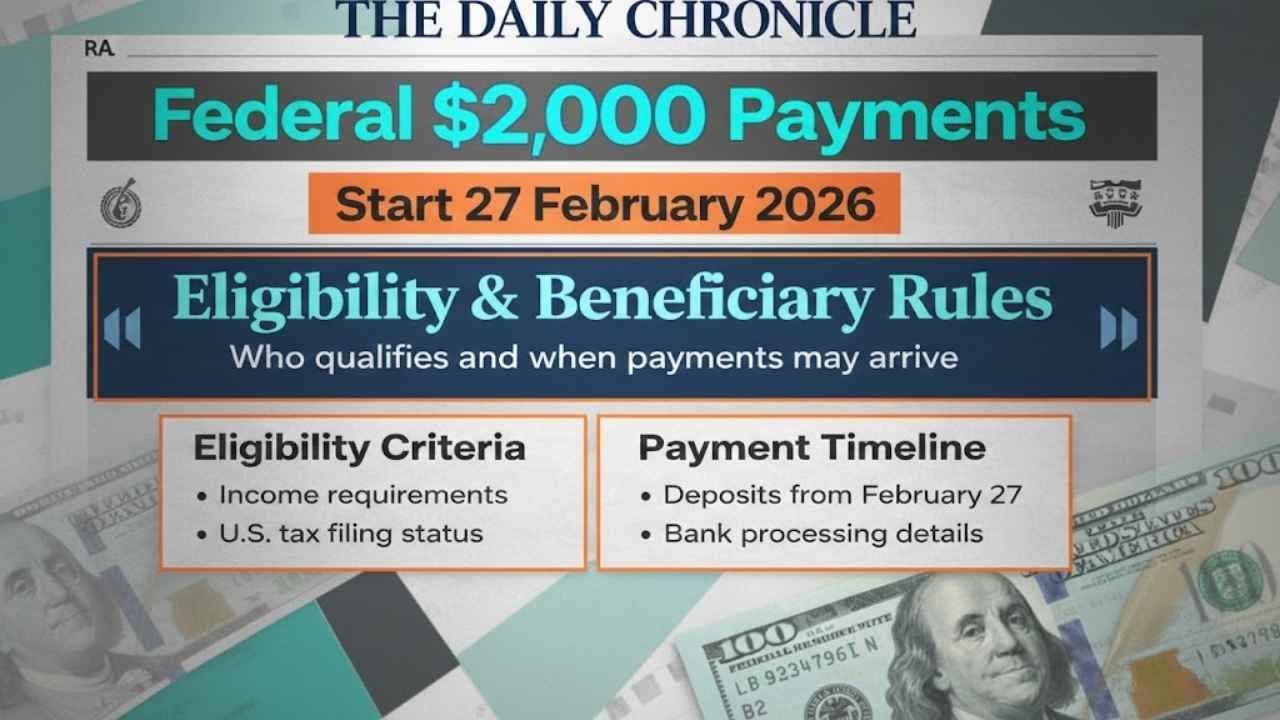
Federal authorities have confirmed the rollout of a new $2,000 payment program scheduled to begin on February 27, 2026. The announcement has drawn widespread attention as households look for clarity on who qualifies, how payments will be delivered, and what steps are required to ensure timely receipt. Unlike rumors that often circulate online, this payment follows defined federal criteria and structured distribution methods.
This guide explains the confirmed details, eligibility framework, payment timeline, and what beneficiaries should expect as the program moves forward.
What Are the Federal $2,000 Payments?

The federal $2,000 payments are designed as targeted financial support rather than a universal payout. The program focuses on providing direct assistance to qualifying individuals and households facing ongoing financial pressure. These payments are administered through existing government systems to ensure accuracy, security, and efficient delivery.
The $2,000 amount is issued per eligible recipient and may be delivered as a standalone payment rather than as part of a standard tax refund, depending on individual eligibility and records.
February 2026 Payment Overview
The payment structure has been designed to prioritize speed and accessibility while maintaining verification safeguards.

Key details include:
- Payment amount: $2,000 per eligible recipient
- Payment start date: February 27, 2026
- Delivery methods: Direct deposit, prepaid debit card, or mailed check
- Eligibility basis: Federal income, residency, and program-specific criteria
- Tracking options: Official government portals and agency updates
Payments will roll out in phases, meaning not all recipients will receive funds on the same day.
Who Is Eligible for the $2,000 Payment?
Eligibility is determined using federal guidelines rather than automatic qualification. The program is primarily aimed at supporting lower- and middle-income households, retirees, and individuals receiving certain federal benefits.

Those most likely to qualify include:
- Individuals and families meeting defined income thresholds
- Retirees and fixed-income beneficiaries meeting program criteria
- Recipients of qualifying social welfare or assistance programs
- Taxpayers whose federal records confirm eligibility
Verification of identity, residency status, and personal details is required before payments are released. The government uses existing records to assess eligibility, so no separate application is required in most cases.
Payment Timeline and What to Expect
Payments are scheduled to begin on February 27, 2026. This date marks the start of distribution rather than a single universal deposit day.
Direct Deposit Priority
Recipients with valid bank information on file will typically receive payments first. Electronic transfers are processed faster and reduce the risk of delivery issues.
Debit Cards and Paper Checks
Prepaid debit cards and mailed checks will follow. These methods may take additional days or weeks depending on processing volume and postal timelines.
Because payments are issued in batches, some recipients may see deposits slightly earlier or later than others.
How the Payments Will Be Distributed
The government will use the most recent payment method on record for each eligible recipient.
Direct Deposit
This remains the fastest and most secure option. Funds are sent electronically to the bank account associated with federal records.
Prepaid Debit Cards
Recipients without direct deposit information may receive payments on government-issued debit cards, which can be used immediately upon activation.
Mailed Checks
Paper checks are typically the last method issued and are subject to mailing and delivery timelines.
Keeping personal and banking details up to date is one of the most effective ways to avoid delays.
Factors That May Delay Payment
Although the program is confirmed, not every eligible recipient will receive funds immediately. Several factors can affect timing.
Common causes of delays include:
- Incorrect or outdated bank account information
- Pending eligibility or identity verification
- Recently updated personal records
- High processing volume during initial rollout
Recipients who recently changed banks, addresses, or personal details should ensure records are accurate through official channels.
How to Track Your $2,000 Payment
Beneficiaries can monitor payment progress using authorized government tracking tools. These systems provide updates once payments are scheduled or issued.
To check status, individuals may need:
- Social Security number or taxpayer identification
- Filing or benefit status
- Confirmation of payment method
During processing, statuses may appear as pending or under review. This does not necessarily indicate a problem and often resolves automatically.
No Registration or Enrollment Required
One of the most important clarifications is that eligible recipients do not need to sign up, register, or pay fees to receive the $2,000 payment. Any message claiming guaranteed access through third-party links should be treated with caution.
Payments are issued only through official government systems using existing records.
Avoiding Misinformation and Scams
High-value federal payments often attract misinformation and fraudulent schemes. Scammers may attempt to impersonate government agencies or request sensitive information.
Official guidance emphasizes that:
- The government does not charge fees to release payments
- Personal information is not requested through unsolicited messages
- Legitimate updates come through official portals or notices
Staying informed through verified sources is essential.
How This Payment Differs From Tax Refunds
The federal $2,000 payment is separate from standard tax refunds and should not be confused with refund delays or credit-based payments. While some recipients may see the payment appear alongside other federal deposits, it is administered under a distinct framework.
This distinction is important for budgeting and expectation management.
Planning Ahead for Late February
While February 27 marks the start of distribution, recipients should plan for some flexibility in timing. Direct deposit users may receive funds quickly, while others may need to wait longer depending on delivery method.
Relying on official updates rather than speculative schedules helps prevent unnecessary concern.
Final Verdict
The federal $2,000 payments beginning February 27, 2026 represent confirmed financial support for eligible individuals and households. Although not universal, the program provides meaningful assistance to those who qualify.
Ensuring personal information is accurate, choosing direct deposit when possible, and tracking payments through official tools are the best ways to ensure smooth and timely receipt.
Disclaimer: This article is for informational purposes only. Payment eligibility, dates, and delivery methods depend on official government guidelines and individual records. Recipients should rely on verified government communications or professional advisors for personalized guidance.