
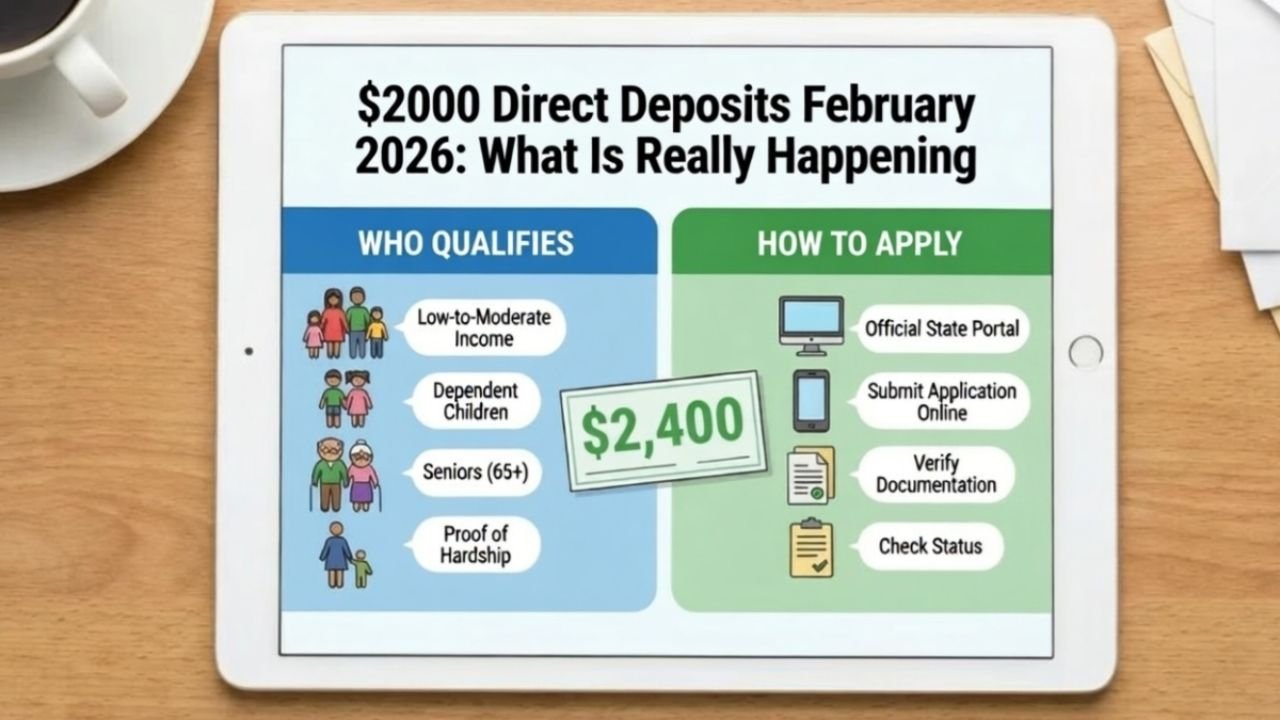
February 2026 has arrived with a familiar wave of online speculation. Across social media platforms, message forwards, and comment sections, claims are circulating that $2,000 direct deposits are suddenly landing in bank accounts nationwide. For many households facing rising living costs, the idea of a fresh federal payment is understandably compelling. When budgets are tight, even the rumor of financial relief spreads quickly.
But the reality is far less dramatic. There is no new nationwide $2,000 stimulus or relief payment approved for February 2026. The deposits people are noticing are tied to routine government payments and tax-related activity that occur every year around this time. Understanding what is actually happening helps set realistic expectations and prevents unnecessary confusion.
No New Nationwide $2,000 Payment Has Been Approved

Despite how convincing online claims may appear, there has been no official authorization of a universal $2,000 federal payment for February 2026. No legislation has been passed, and no announcement has been made by federal agencies confirming such a program.
Unlike the emergency stimulus payments issued during the pandemic years, current federal policy does not include blanket cash payments for all Americans. The deposits appearing in February are connected to existing benefit programs and early tax refunds, not a newly introduced relief initiative.
Why Early-Year Payments Spark Confusion Every Year
The first two months of the year are always a high-activity period for government payments. Social Security benefits reflect annual cost-of-living adjustments starting in January, meaning many recipients see slightly higher monthly deposits. At the same time, tax filing season begins, and early filers may start receiving refunds from the IRS.

When these payments arrive close together, they can appear unusually large or unexpected. Weekends, bank processing times, and holidays can also shift posting dates, making deposits seem sudden or unfamiliar. This overlap is one of the main reasons rumors of new payments gain traction early each year.
Who Might See Deposits Near $2,000
There is no standard $2,000 amount being issued to everyone. However, some individuals may notice deposits close to this figure depending on their specific benefits or tax situation.
Retirees with higher Social Security benefits may receive monthly payments near $2,000, especially after annual adjustments. Taxpayers who qualify for refundable credits, such as credits related to dependents or earned income, may see refunds around or above this amount if they file early. Veterans receiving disability compensation or pension payments could also see deposits in a similar range based on their service history and benefit level.

Each of these cases is based on individual eligibility, not a universal rule.
Why Federal Payments Are Never One-Size-Fits-All
Federal benefit programs are designed around personal circumstances, not flat payments. Social Security benefits depend on lifetime earnings and work history. Disability benefits are based on eligibility criteria and medical qualifications. Veterans’ benefits vary depending on service records and disability ratings.
Tax refunds are even more individualized. They depend on income, filing status, dependents, withholdings, and applicable credits. Two people filing in the same month may receive very different amounts, even if their situations appear similar. Online posts rarely explain this complexity, which fuels unrealistic expectations.
How Payment Timing Adds to the Misunderstanding
Another major source of confusion is timing. Social Security payments are issued on different days depending on birth dates, while Supplemental Security Income follows a fixed monthly calendar. Tax refunds depend entirely on when a return is filed and how quickly it is processed.
Banks also influence how deposits appear. Some institutions release funds early, while others wait until the official payment date. When multiple payments post within a short window, they may look like a single large deposit, reinforcing the belief that something new has been issued.
The Growing Risk of Misinformation and Scams
Whenever rumors of government payments spread, scams are not far behind. Fraudsters often promise guaranteed $2,000 deposits and attempt to collect personal or banking information through phone calls, emails, texts, or social media messages.
Government agencies do not contact people unexpectedly to request sensitive information. Any claim about a new federal payment should always be verified through official government sources. Staying cautious is especially important for seniors, retirees, and households under financial strain, as they are often targeted during periods of uncertainty.
What These Deposits Actually Signal About 2026
The strong reaction to $2,000 deposit rumors says more about the financial pressure many households are experiencing than about policy changes. Rising costs continue to strain budgets, making any hint of extra income feel significant.
While discussions about future relief programs may continue in political and economic circles, there are no confirmed plans for a nationwide $2,000 payment in February 2026. For now, the deposits appearing in accounts are part of established systems that operate every year.
How to Stay Informed Without the Stress
The most reliable way to avoid confusion is to track official payment schedules and understand how your specific benefits work. Checking verified government sources and maintaining awareness of your own eligibility helps prevent disappointment and poor financial decisions.
Relying on rumors can lead people to delay bills or make spending choices based on money that is not actually coming. Clear information provides stability, even when finances feel uncertain.
The Bottom Line
There is no approved nationwide $2,000 stimulus or federal payment for February 2026. The deposits appearing in bank accounts are linked to existing programs such as Social Security, SSI, disability benefits, veterans’ benefits, and IRS tax refunds. The amount and timing of these payments vary widely based on individual circumstances.
Understanding the true source of these deposits helps reduce confusion and limits the spread of misinformation. As the year continues, staying focused on official announcements and verified details remains the best way to manage expectations and plan confidently.
Disclaimer
This article is for informational purposes only and does not provide legal, tax, or financial advice. No universal $2,000 federal payment has been approved for February 2026. Payment amounts and timelines vary based on individual circumstances and official government rules. Readers should consult verified government sources or qualified professionals for personalized guidance.