
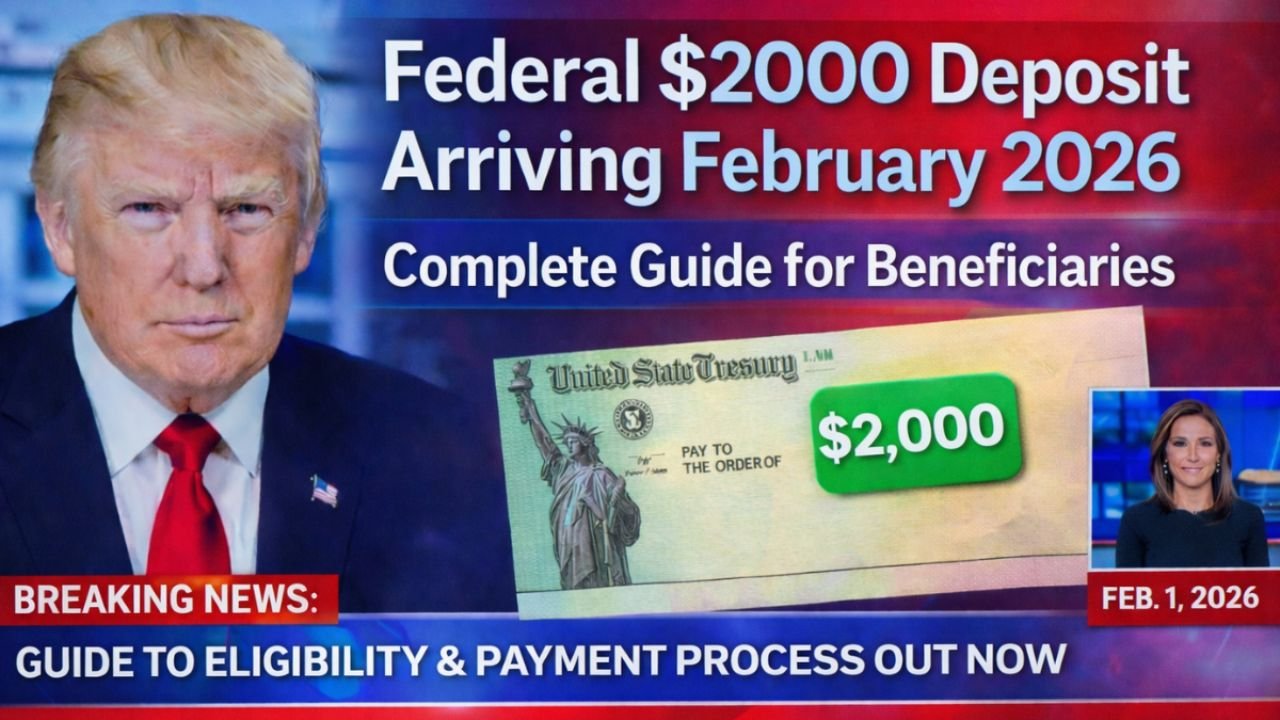
In recent weeks, headlines and online discussions about a possible $2,000 federal deposit arriving in February 2026 have gained significant attention. With living costs continuing to rise across housing, food, healthcare, and utilities, even the suggestion of direct financial support has sparked strong interest. For many households, especially retirees, low-income workers, and families on fixed budgets, extra federal assistance could offer meaningful short-term relief.
However, it is essential to separate confirmed facts from speculation. As of now, the $2,000 federal payment being discussed has not been officially approved. Understanding the current status, potential eligibility scenarios, and how such payments typically work can help people stay informed without making risky financial assumptions.
Understanding the Proposed $2,000 Federal Payment

The $2,000 amount being discussed is described as a one-time federal relief payment rather than an ongoing benefit program. It is not part of Social Security, Supplemental Security Income, or any existing monthly entitlement. Instead, it resembles earlier emergency-style payments that were issued during periods of economic stress.
The core idea behind the proposal is to offer temporary financial support without permanently expanding government spending programs. Supporters argue that a single payment could help households manage urgent expenses, such as rent, overdue bills, or medical costs, during a period of sustained inflation. Critics, however, point out that no formal funding structure or legislative approval currently exists.
At this stage, there is no signed law, executive order, or official agency announcement confirming that the payment will happen.
Why February 2026 Is Being Mentioned

February is frequently referenced in discussions because it aligns with other major federal payment activity. Early in the year, many Americans receive tax refunds, Social Security payments adjusted for cost-of-living changes, and other benefits. When multiple deposits arrive close together, it can create confusion and fuel rumors of new programs.
In addition, early-year timing is often viewed as practical for any potential relief payment because tax records and benefit databases are already being actively used. Still, without congressional approval, February 2026 remains a speculative timeframe rather than a confirmed payout window.
Possible Eligibility Criteria If Approved
While no official eligibility rules exist yet, discussions often reference eligibility models used in past federal relief efforts. If the payment were approved, eligibility would likely be based on existing government records to allow for faster distribution.

Potential eligibility factors could include income thresholds designed to prioritize low- and middle-income households. Tax filing status would probably play a key role, meaning individuals who file federal tax returns could be automatically evaluated.
People receiving Social Security retirement, disability benefits, or Supplemental Security Income may also be considered, especially if income-based eligibility rules are applied. Certain veterans receiving federal compensation could potentially be included as well.
Legal residency and a valid Social Security number would almost certainly be required, as has been the case with previous federal payments.
Would an Application Be Required?
If the payment follows the structure of earlier federal relief programs, most eligible individuals would not need to apply separately. Government agencies typically rely on existing tax filings and benefit records to determine eligibility and issue payments automatically.
That means people who have recently filed tax returns or are already receiving federal benefits would likely be evaluated without submitting additional forms. However, this also means that outdated bank or address information could cause delays.
Expected Payment Methods
If approved, payments would most likely be issued using familiar delivery methods. Direct deposit would be the fastest option for individuals with bank details on file with the IRS or Social Security Administration. Many people already receive refunds or benefits this way.
Those without direct deposit information on record could receive paper checks by mail. In some past programs, prepaid debit cards were also used, particularly for individuals without traditional bank accounts.
Distribution would likely occur in phases rather than all at once, depending on eligibility groups and payment methods.
What Beneficiaries Should Do Now
Even though the payment is not confirmed, there are practical steps people can take to stay prepared. Ensuring that recent tax returns are filed accurately and on time helps keep records current. Updating bank account information and mailing addresses with relevant agencies reduces the risk of delays if any future payment is approved.
Equally important is staying alert to misinformation. Scammers often exploit rumors of government payments by sending emails, texts, or social media messages promising guaranteed deposits. These messages may ask for personal information, fees, or verification links. Official agencies do not request sensitive details through unsolicited communication and never charge money to release benefits.
Why Caution Matters When Planning Finances
Speculative payment news can lead people to make financial decisions based on money that may never arrive. Budgeting around unapproved proposals can create unnecessary stress if expectations are not met. Financial experts consistently advise relying only on confirmed income when making spending or repayment plans.
Following official government announcements and reputable sources is the safest way to stay informed.
Current Status and Key Takeaway
As of early February 2026, the $2,000 federal deposit remains a proposal and a topic of discussion, not an authorized payment. No official eligibility rules, payment dates, or application instructions have been released. Any claims stating that the payment is guaranteed or already scheduled should be treated with caution.
Staying informed, keeping records updated, and avoiding scams are the best steps individuals can take while waiting for verified information.
Disclaimer: This article is for general informational purposes only. The $2,000 federal payment discussed has not been officially approved. Eligibility requirements, payment methods, and timelines may change if legislation is passed. Always verify updates through official government sources before making financial decisions.